Vermont English learners had a 70% four-year graduation rate in the 2025 state results. The published six-year rate was 88%, an 18-point difference and the largest among 19 state subgroups with both measures.
The statewide rates were 82% at four years and 84% at six, a 2-point difference. The English learner comparison was nine times as large.
The longer window changed the comparison
At four years, the English learner rate was 12 points below the all-student rate. At six years, the published English learner rate was 4 points above the statewide six-year rate.
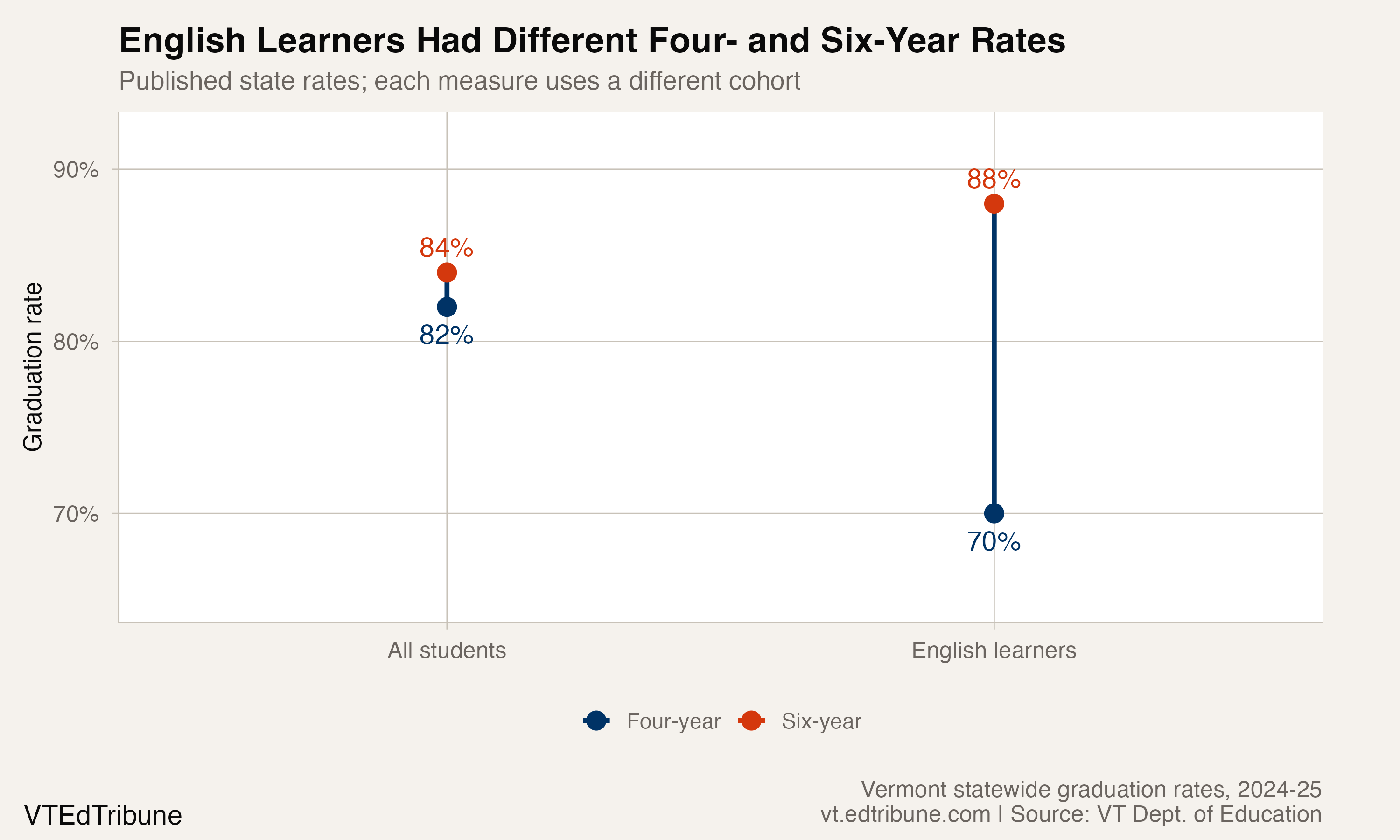
That movement makes the extended measure especially important for understanding this subgroup's published outcome. A four-year rate by itself captures on-time completion. It does not show the higher rate Vermont reports under the longer window.
English learners also led the full paired-subgroup comparison. Students identified as Black had the next-largest difference, 12 points, followed by students identified as Asian at 10 points. Students with special education plans had a 6-point difference.
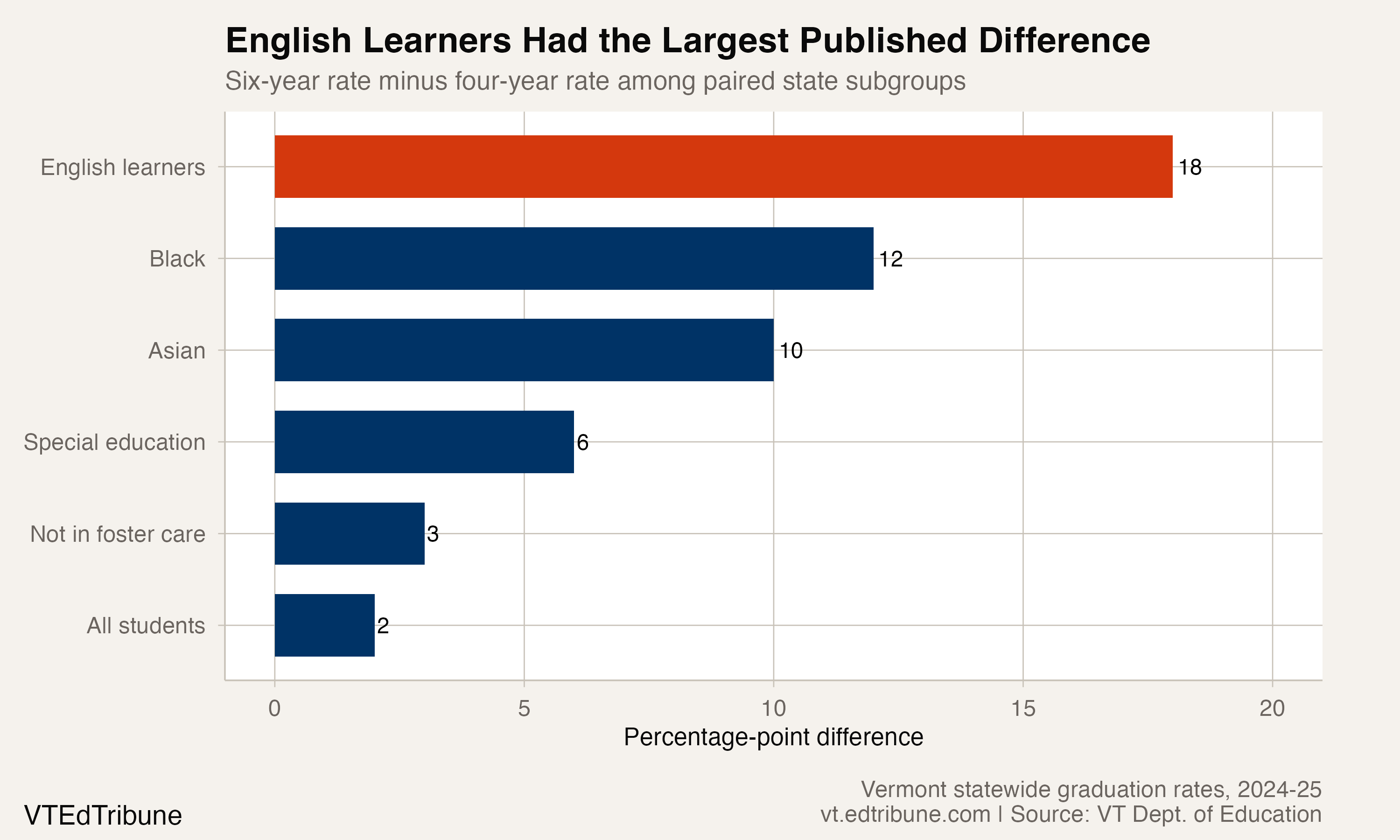
The categories overlap in different ways. English learner and special education status can overlap with race, gender and economic status. The chart ranks each published rate pair independently; it does not divide students into mutually exclusive pieces.
Two cohorts, not one before-and-after group
The 18-point figure is a difference between published measures, not a measured gain for one identical cohort. Vermont's English learner four-year cohort contained 158 students. The six-year cohort contained 93.
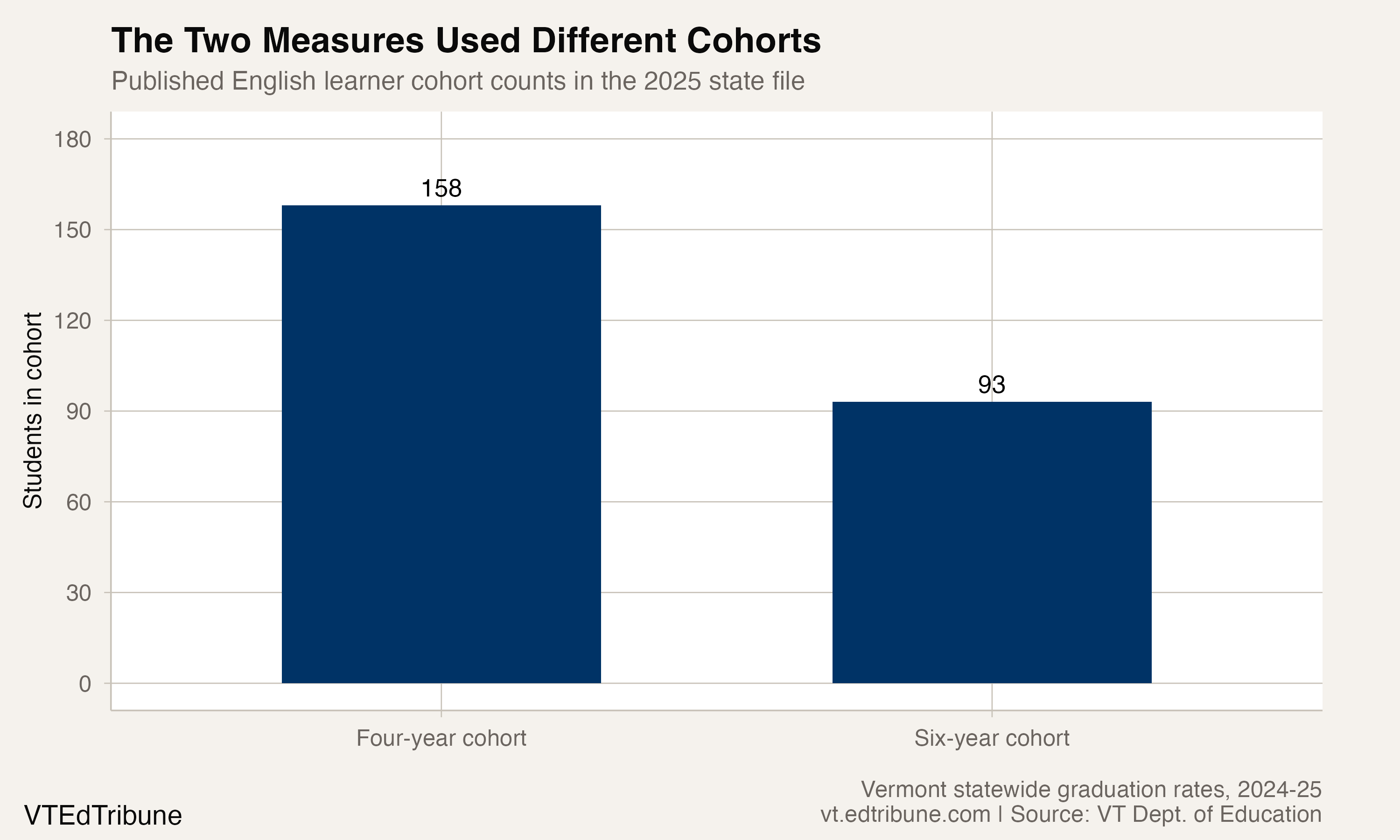
Because the membership and size differ, the data cannot show that the same students moved from 70% to 88%. Differences in who belongs to each cohort could account for part of the gap.
The published rates also do not measure language-acquisition time, course access, credit completion or the services available to students. Those are possible reporting questions, not conclusions supported by the rates.
A bright result, within clear limits
The result remains notable within those limits. English learners ranked first among 19 paired subgroups for the size of the published four-to-six-year difference. Their six-year rate was 88%, compared with 84% statewide.
This comparison covers one reporting year. It cannot establish whether the pattern repeats across graduating classes.
Graduation figures come from Vermont Agency of Education four- and six-year adjusted cohort graduation results for 2025, available through the agency's Annual Snapshot data-download page.
Detailed code that reproduces the analysis and figures in this article is available exclusively to EdTribune subscribers.
Discussion
Sign in to join the discussion.
Loading comments...