Correction (July 20, 2026; updated July 22): An earlier version said Karen Conroy became St Johnsbury superintendent in January 2025 and inherited attendance gains already underway. She joined the district as superintendent on July 1, 2022, before the two-year improvement described here. A later data-integrity audit found 10, not more than 12, Vermont districts above a 30% chronic-absence rate in 2023-24, and removed unresourced descriptions of regional conditions and possible causes that the aggregate attendance files cannot establish.
Two years ago, more than half the students in Kingdom East School District were chronically absent. In St Johnsbury, the figure was approaching half. Both districts are in Vermont's Northeast Kingdom.
By 2023-24, both districts had pulled their chronic rates below the state average. Kingdom East↗ET dropped from 50.6% to 22.5%. St Johnsbury↗ET went from 46.1% to 22.2%. These are the largest turnarounds in Vermont over the past two years, achieved in the state's most economically isolated region.
Parallel trajectories
The two districts improved on similar paths. Kingdom East shed 28.1 percentage points and St Johnsbury 23.9 from their 2021-22 peaks, with the steepest drop in the first year and continued improvement in the second.
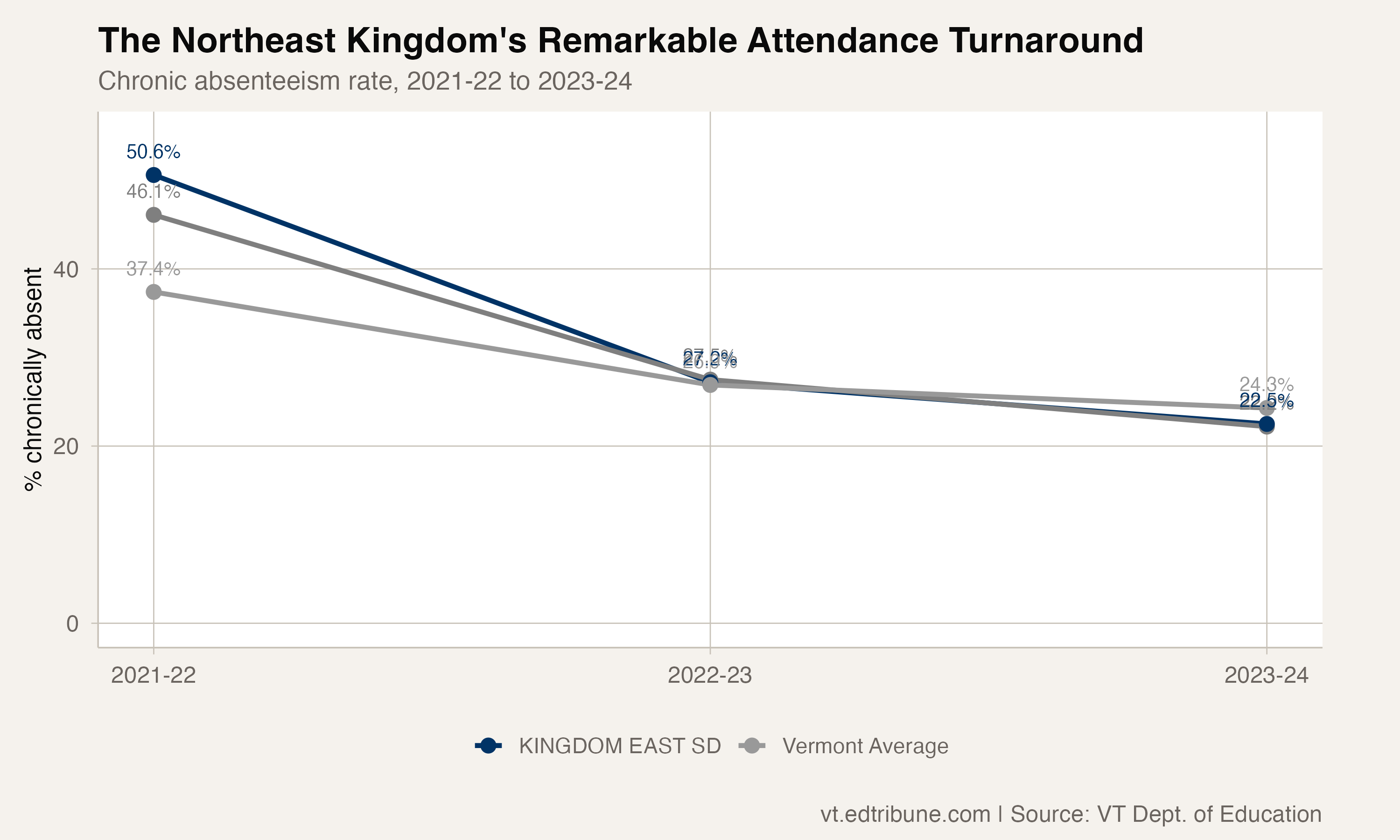
Kingdom East's 28.1 percentage point improvement from 2022 to 2024 is the largest of any Vermont district. St Johnsbury's 23.9 points ranks third. The aggregate files establish the timing and scale of those declines, but do not identify their causes.
The raw numbers
In 2021-22, 631 of Kingdom East's 1,247 students were chronically absent. By 2023-24, that number had dropped to 277 out of 1,232 -- 354 fewer students missing excessive school.
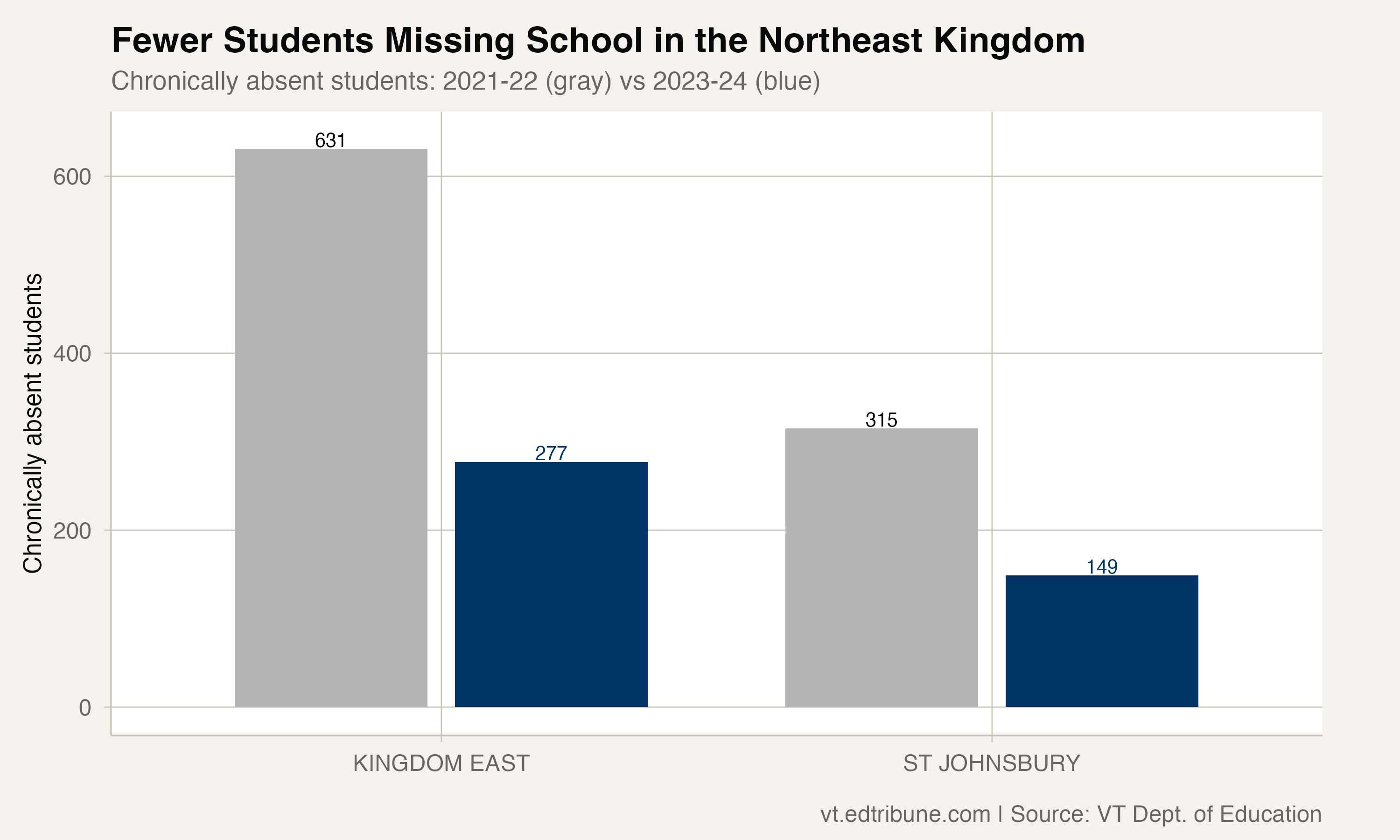
St Johnsbury saw 166 fewer chronically absent students, going from 315 of 684 to 149 of 670. The district is smaller, but the proportional improvement is comparable.
What the data can show
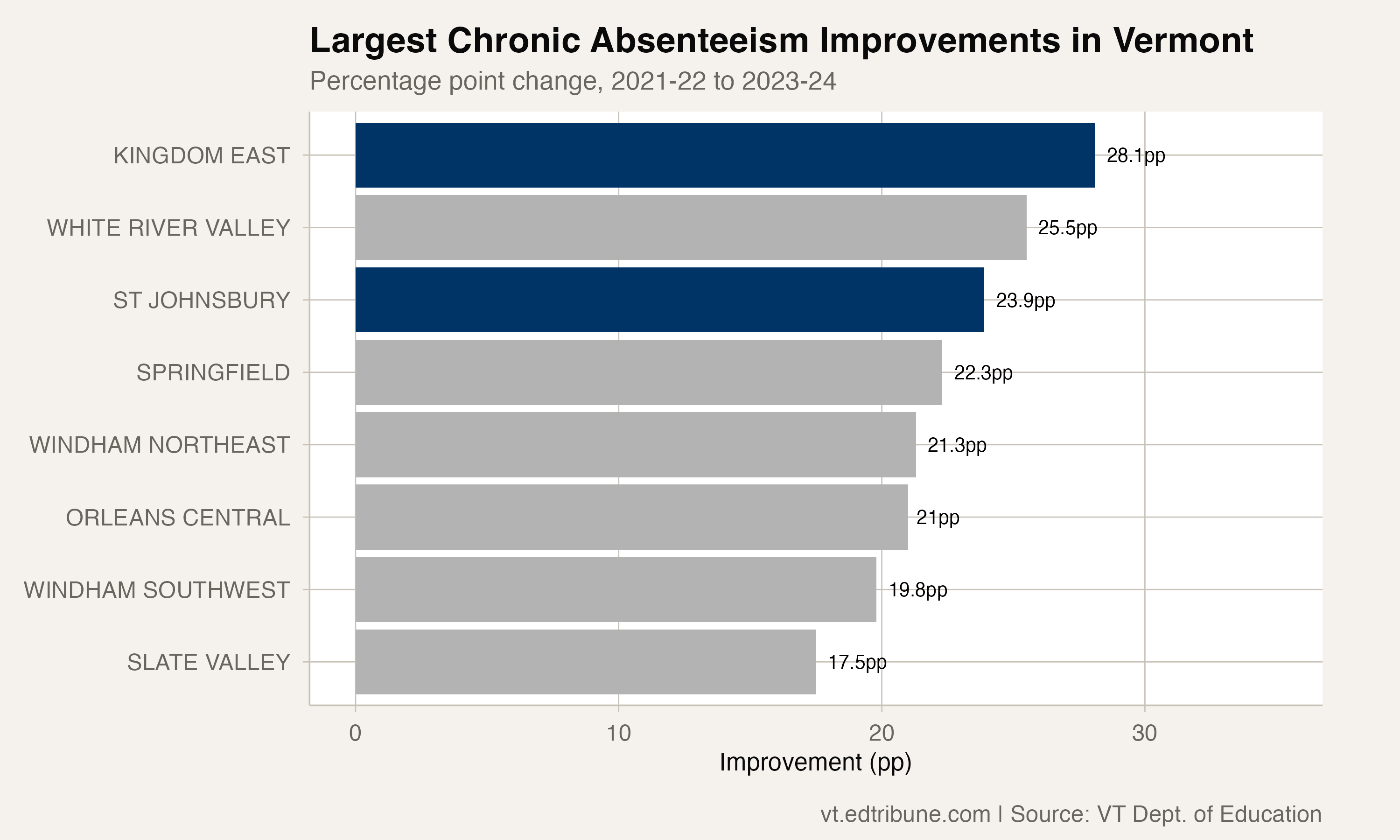
Kingdom East and St Johnsbury recorded these improvements over 24 months. The state files do not contain transportation, healthcare, family-income or program-participation fields, so they cannot test explanations for the change.
Leadership timing
Karen Conroy became superintendent of St Johnsbury on July 1, 2022, before the gains described here. The attendance file does not identify specific district programs, so it cannot attribute the improvement to a particular intervention.
The result matters beyond the Northeast Kingdom: 10 Vermont districts still had chronic rates above 30% in 2023-24.
Data source: chronic absenteeism data from the Vermont Agency of Education, covering 2021-22 through 2023-24.
Detailed code that reproduces the analysis and figures in this article is available exclusively to EdTribune subscribers.
Discussion
Sign in to join the discussion.
Loading comments...